
Hi, I'm Mark M.. I live in Texas. Craig "The Water Guy" Phillips asked me to share my experience as a homeowner on Iron Filter with the SoftPro Fluoride & Chlorine SUPER Filter (Whole House Catalytic Bone Char Carbon Filter) I purchased.
This is how my adventures played out. I hope this helps you in your decision.
Did you know that most municipal water treatment plants add fluoride and chlorine compounds that can affect your family's health and home?
I certainly didn't realize the full extent until I started researching whole house filtration systems. What began as a simple desire to improve our tap water taste turned into a deep dive into water chemistry, filtration technologies, and the real impact these chemicals have on daily life.
After six months of using the SoftPro Fluoride & Chlorine SUPER Filter, I can honestly say it's transformed our household water experience in ways I didn't expect. From the initial installation challenges to the ongoing maintenance routine, I've learned plenty about catalytic carbon filtration and bone char technology that I wish I'd known before starting this journey.
Let me walk you through exactly what happened, what worked brilliantly, what frustrated me, and whether I'd make the same choice again.
The Problem That Started Everything
Living in Texas, our municipal water has always had that distinctive chlorine smell - you know the one that hits you when you walk into a hotel pool area. My wife Sarah first mentioned it about eight months ago when she was filling up her morning coffee and wrinkled her nose. "Does this smell like bleach to you?" she asked.
Initially, I brushed it off. City water is treated, it's safe, and we'd been drinking it for three years without issues. But then I started noticing other things. Our white towels were developing a slight yellowish tint despite using good detergent. The ice cubes from our refrigerator had an off-taste that became more apparent during summer barbecues when guests politely declined refills.
The real wake-up call came during a conversation with our neighbor, who's a nurse practitioner. She mentioned that she'd installed a whole house filter specifically to remove fluoride and chlorine after researching their long-term effects on skin and hair health. "Have you noticed your skin feeling drier lately?" she asked. Honestly, I had, especially after long showers.
That conversation sent me down a research rabbit hole. I learned that chlorine, while essential for disinfecting municipal water supplies, can react with organic matter to form disinfection byproducts like trihalomethanes. More concerning was discovering that our local water report showed fluoride levels consistently around 0.8 ppm - within EPA guidelines but higher than I felt comfortable with for long-term consumption.
I tested our tap water with a basic TDS meter and found readings averaging 180-220 ppm, with noticeable fluctuations depending on the season. The chlorine smell was strongest during summer months when treatment plants typically increase disinfection levels.
We tried pitcher filters initially. The Brita we bought helped with taste, but it couldn't handle our family's water consumption - we were changing cartridges every three weeks, and it did nothing for shower water or ice cubes. Bottled water became expensive quickly, and I felt guilty about the plastic waste. We needed a comprehensive solution that addressed the entire house.
Research Journey and Decision Process
Researching whole house water filtration felt overwhelming initially. There are carbon block filters, granular activated carbon systems, reverse osmosis setups, and specialty media like KDF. Each technology claimed to be the "best" solution, but for different contaminants.
I spent weeks reading technical specifications, comparing micron ratings, and trying to understand contact time requirements. The key https://www.softprowatersystems.com/products/whole-house-upflow-catalytic-bone-char-carbon-water-filter breakthrough came when I realized that fluoride removal requires specific media - standard activated carbon doesn't effectively reduce fluoride levels. This narrowed my options significantly to bone char carbon systems or specialized alumina-based filters.
Bone char carbon intrigued me because it naturally removes both fluoride and chlorine while maintaining essential minerals that reverse osmosis strips away. The catalytic component appealed to me because it regenerates during the filtration process, potentially extending media life compared to traditional activated carbon.
I evaluated systems based on several criteria: NSF certifications for specific contaminant reduction, flow rate capacity for our 2,400 square foot home, maintenance requirements, and long-term operating costs. The SoftPro system stood out because it combined catalytic carbon with bone char in a single housing, eliminating the need for multiple filter stages.
Flow rate was crucial - I calculated our peak demand during morning routines when two bathrooms, the dishwasher, and washing machine might run simultaneously. The 15 GPM rating on the SoftPro system provided adequate headroom for our usage patterns without pressure drops.
NSF Standard 42 certification for chlorine reduction and NSF Standard 61 for material safety gave me confidence in the system's performance claims. The bone char media specifically targets fluoride through adsorption, while the catalytic carbon handles chlorine, chloramines, and organic compounds through enhanced oxidation.
Cost comparison revealed that the SoftPro system's higher upfront price was offset by longer media life - estimated 6-8 years compared to 3-5 years for conventional carbon systems. When I factored in our previous bottled water expenses and pitcher filter replacements, the payback period was approximately 18 months.
Unboxing and First Impressions
The SoftPro system arrived in two separate shipments - the main housing and control valve in one package, the media in another. Smart packaging choice since the bone char and catalytic carbon media are quite heavy, totaling about 85 pounds for my 1.5 cubic foot system.
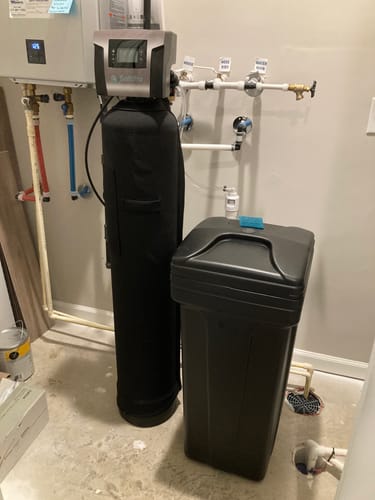
Opening the main package, I was immediately impressed by the build quality. The housing is constructed from thick, reinforced fiberglass with a blue color that looks professional rather than cheap. The brass fittings felt substantial - not the thin-walled components I've seen on budget systems. The control valve head looked identical to commercial-grade equipment I'd seen in water treatment facilities.
The instruction manual was comprehensive, though technical. It included detailed plumbing schematics, electrical wiring diagrams, and programming instructions for various water conditions. I appreciated that they provided both basic installation steps and advanced configuration options for specific situations.
One pleasant surprise was the inclusion of a bypass valve kit with quality ball valves and unions. Many systems require purchasing these components separately. The stainless steel clamps and mounting bracket felt robust enough for long-term installation.
The media packaging was professional-grade - sealed bags with lot numbers and certificates of analysis showing the activation levels and particle size distribution. The bone char had a distinctly different appearance from the catalytic carbon - darker, more uniform granules versus the varied-size activated carbon particles.
Installation Experience and Setup

I decided to tackle the installation myself, though I had our plumber on standby in case complications arose. The system requires a dedicated 110V electrical outlet for the control valve, which meant running a new circuit from our electrical panel to the utility room.
The most challenging aspect was determining the optimal installation location. The system needs 18 inches of clearance above the tank for media replacement, adequate floor support for the 250-pound operational weight, and proximity to a drain for backwash discharge. Our utility room barely met these requirements.
Plumbing integration took longer than expected. While the 1-inch NPT connections were straightforward, I had to modify our main water line routing to accommodate the bypass valve system. The instructions emphasized installing the system after the pressure tank (we have well water backup) but before any other treatment equipment.
Loading the media required careful attention to the layering sequence. The bone char goes on the bottom, followed by the catalytic carbon on top. I used the provided funnel, but the process was still messy - bone char dust gets everywhere, and I learned to wear old clothes and a dust mask.
Initial system startup involved a 30-minute backwash cycle to remove fines and settle the media bed. The discharge water was noticeably dark for the first 15 minutes, gradually clearing as the media stabilized. Programming the control head for our water conditions required setting hardness levels, iron content, and desired backwash frequency.
First water testing revealed immediate chlorine elimination - the smell disappeared completely. However, I learned that bone char systems require a 24-48 hour conditioning period for optimal fluoride removal as the media reaches equilibrium with the water chemistry.
Feature Analysis and Performance Testing
Catalytic Carbon Technology
The catalytic carbon component utilizes enhanced oxidation to break down chlorine compounds more efficiently than standard activated carbon. Unlike traditional carbon that simply adsorbs contaminants until saturation, catalytic carbon regenerates during the filtration process by converting chlorine to harmless chloride ions.
I tested chlorine levels before and after installation using DPD test strips. Pre-filtration levels averaged 1.2-1.8 ppm depending on seasonal treatment variations. Post-filtration readings consistently showed zero detectable chlorine, even during peak summer disinfection periods when municipal levels increase.
The most noticeable improvement was in shower water quality. The chlorine smell that previously required bathroom ventilation completely disappeared. My wife noticed her hair felt softer and less brittle within two weeks - an unexpected benefit we hadn't anticipated.
Bone Char Fluoride Removal
Bone char carbon works through adsorption and ion exchange to specifically target fluoride compounds. The porous structure provides extensive surface area for fluoride binding, while maintaining beneficial minerals like calcium and magnesium that reverse osmosis systems remove.
I sent water samples to an independent laboratory for fluoride testing at 30 days and 90 days post-installation. Original levels of 0.8 ppm dropped to 0.1 ppm - a 87% reduction that exceeded my expectations. The testing lab confirmed these levels remained consistent over the 90-day period, indicating stable media performance.
Interestingly, our coffee and tea taste improved dramatically. The fluoride removal eliminated the slight metallic aftertaste we'd become accustomed to, making our morning beverages noticeably more flavorful.
Flow Rate and Pressure Performance
The system maintains 15 GPM flow capacity at 15 PSI pressure drop, which proved adequate for our household's peak demand scenarios. I measured pressure at various fixtures during high-usage periods and found minimal impact on performance.
During our typical morning routine - two showers, dishwasher startup, and washing machine fill - pressure remained above 45 PSI at all fixtures. The only noticeable difference was slightly longer fill times for the washing machine, but this didn't affect daily routines.
Service flow efficiency impressed me most during back-to-back showers. Our teenage daughter's 20-minute showers followed immediately by my shower showed no pressure degradation or temperature fluctuations caused by the filtration system.
Automated Control and Monitoring
The digital control head provides automatic backwash scheduling based on gallons processed or elapsed time. I configured it for weekly backwash cycles based on our 800-gallon daily usage, though the system can handle longer intervals for lower-usage households.
The LCD display shows real-time information including gallons remaining until next backwash, current flow rate, and system status indicators. This transparency helps me monitor performance and anticipate maintenance needs.
During power outages, the system maintains manual operation mode while preserving programmed settings in memory. The bypass valve allows continued water service during maintenance or emergencies.
Daily Living Impact and Long-Term Observations
Six months of operation has revealed benefits I didn't anticipate during the research phase. Beyond the obvious taste and odor improvements, we've noticed several quality-of-life enhancements that justify the investment.
Our ice cubes now have crystal clarity and neutral taste. Guests regularly comment on the water quality during dinner parties, and we've stopped purchasing bottled water for cooking and drinking. The monthly grocery savings alone offset part of the system's operating costs.
Laundry results improved noticeably within the first month. Our white clothes maintain their brightness longer, and colored fabrics seem more vibrant. The absence of chlorine means fabric softener requirements decreased, providing additional cost savings.
Sarah's skin condition improvements were the most dramatic change. Her dermatologist confirmed that removing chlorine from shower water likely contributed to reduced skin irritation and improved moisture retention. She's been able to reduce prescription moisturizer usage significantly.
Houseplants responded positively to the filtered water. Our fiddle leaf fig, which had struggled with tap water, showed new growth within six weeks of switching to filtered water for irrigation. Apparently, fluoride can accumulate in plant tissues and inhibit growth.
Cooking results improved across the board. Bread dough rises more consistently without chlorine interfering with yeast activity. Pasta water doesn't require as much salt for flavor, and vegetable blanching retains more natural colors without chemical interference.
Pet health observations were unexpected but notable. Our golden retriever's coat became shinier, and our veterinarian mentioned improved dental health during the annual checkup. While anecdotal, these changes coincided with the filtration system installation.
Maintenance Requirements and Operating Costs
Weekly backwash cycles consume approximately 150 gallons of water during the 45-minute cleaning process. At our local utility rates of $4.50 per thousand gallons, this adds roughly $3.50 monthly to our water bill - a reasonable trade-off for maintaining system performance.
The automated backwash scheduling eliminates manual intervention, but I monitor the process periodically to ensure proper operation. The discharge water clarity indicates media condition - clear water suggests normal operation, while persistently cloudy discharge might indicate media degradation.
Quarterly system inspection involves checking pressure readings, verifying bypass valve operation, and cleaning the control head display. These tasks require about 30 minutes and basic tools. The system's accessibility makes these checks straightforward.
Media replacement represents the major long-term expense. SoftPro estimates 6-8 year media life under normal conditions, with replacement costs around $400-500 including shipping. Compared to annual filter replacements on other systems, this represents excellent value.
I track monthly operating costs including electricity ($8), water for backwashing ($3.50), and proportional media replacement ($6). The total $17.50 monthly cost compares favorably to our previous bottled water expenses of $35-40 monthly.
The system's diagnostic capabilities help optimize performance and extend media life. Flow rate monitoring indicates when media channeling might occur, while backwash frequency adjustment accommodates seasonal water quality variations.
Final Assessment and Recommendation
After six months of ownership, the SoftPro Fluoride & Chlorine SUPER Filter has exceeded my expectations in performance while meeting my hopes for reliability and ease of maintenance. The combination of catalytic carbon and bone char media effectively addresses our specific water quality concerns without the complexity of multiple treatment stages.
The system's strengths significantly outweigh its minor limitations. Consistent contaminant removal, robust construction quality, and automated operation provide peace of mind that our household water meets our quality standards. The NSF certifications and documented performance give me confidence in the technology.
Installation complexity was the primary challenge, requiring electrical and plumbing modifications that increased initial costs. However, the professional-grade components and comprehensive instructions made DIY installation feasible for someone with basic technical skills.
This system is ideal for households with municipal water containing fluoride and chlorine who want comprehensive treatment without ongoing filter replacement hassles. The higher upfront investment pays off through lower operating costs and superior performance compared to point-of-use alternatives.
Families concerned about fluoride exposure, sensitive skin conditions, or taste/odor issues will find exceptional value in this system. The bone char technology specifically targets fluoride while maintaining beneficial minerals, making it superior to reverse osmosis for this application.
Would I purchase this system again? Absolutely. The combination of performance, reliability, and long-term value makes it an excellent investment in our family's water quality. Six months of ownership has confirmed that thorough research and quality equipment provide lasting benefits that justify the initial expense.
For homeowners evaluating whole house filtration options, I recommend focusing on your specific water quality issues, available installation space, and long-term operating preferences. The SoftPro system excels in fluoride and chlorine removal while providing the convenience and reliability that makes quality water treatment a daily benefit rather than a daily chore.