
Hi, I'm Gord Z. I live in West Virginia. Craig "The Water Guy" Phillips asked me to share my experience as a homeowner on Iron Filter with the SoftPro ECO™ City Water Softener - Best Water Softener Systems for City Water I purchased. This is how my adventures played out. I hope this helps you in your decision.

Did you know that replacing an old water softener might be simpler than you think?
When I started researching the SoftPro ECO water softener eight months ago, I was dreading a complete plumbing overhaul. Like most homeowners dealing with hard water issues, I'd been putting off this upgrade for years, assuming it would be a nightmare of torn-up floors and expensive contractor bills.
What I discovered changed everything about how I approach home water treatment.
After living with this system through two seasons of varying water conditions, dealing with the learning curve of proper maintenance, and measuring real performance data, I'm sharing the complete story. This isn't just another product review - it's a detailed account of what actually happens when you install a SoftPro ECO in a real home with real water problems.
Why I Finally Decided to Replace My Old Water Softener
My journey started with a 15-year-old water softener that was consuming salt like crazy and barely keeping up with our household's demands. Living in West Virginia, our municipal water arrives with moderate hardness - around 8-10 grains per gallon - but it was enough to leave white spots on everything and make our skin feel tight after showers.
The breaking point came last winter when I noticed our tankless water heater was making unusual noises. A service call revealed mineral buildup in the heat exchanger, costing me $300 in cleaning fees. That's when I realized my aging softener wasn't protecting our appliances anymore.
I spent weeks researching different technologies. Salt-based ion exchange remained the gold standard for true hardness removal, but I wanted something more efficient than my old unit. The SoftPro ECO kept appearing in forums and professional recommendations, particularly for its metered regeneration system and compact footprint.
What convinced me wasn't the marketing claims - it was the technical specifications.
The demand-initiated regeneration meant no more wasteful time-based cycles. The high-capacity resin bed promised longer intervals between regenerations. Most importantly, the system was designed to work with existing plumbing configurations.
Unboxing and First Impressions of Build Quality
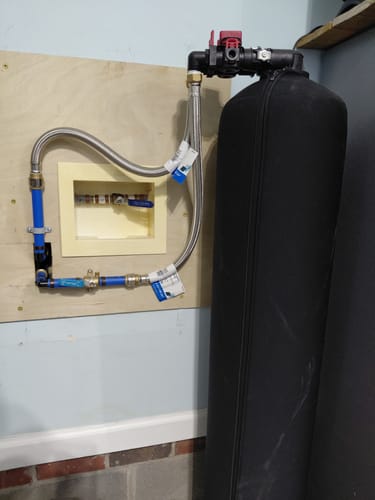
When the SoftPro ECO arrived, I was immediately impressed by the packaging quality. Everything was secured properly, and nothing had shifted during shipping. The unit itself felt substantial - not flimsy like some residential softeners I'd examined at big box stores.
The fiberglass mineral tank has a smooth, professional finish that doesn't look out of place in a utility room. At 54 inches tall and 10 inches in diameter, it's surprisingly compact for a 32,000 grain capacity system. The brine tank is equally well-designed, with a clear salt level indicator and a sturdy lid that seals properly.
What stood out was the attention to detail in the control head. The digital display is clear and intuitive, with actual words instead of cryptic symbols. The programming interface seemed straightforward, though I knew I'd need to spend time understanding all the settings.
All the necessary fittings were included: bypass valve, installation kit, and even thread sealant. The manual was comprehensive without being overwhelming - a good sign that the manufacturer understands their customers.
Installation Experience: Easier Than Expected
Here's where that opening comment about copper pipe modifications becomes relevant. My existing softener loop was configured with 3/4-inch copper lines, and the SoftPro ECO's inlet and outlet connections matched perfectly. I only needed to adjust the vertical positioning and add about 6 inches to one connection.
The entire installation took me a Saturday morning, working at a relaxed pace. I'm comfortable with basic plumbing, but this wasn't challenging work. The most time-consuming part was ensuring proper alignment and support for the mineral tank.
The bypass valve installation was straightforward. SoftPro includes a high-quality three-valve bypass that allows complete isolation for maintenance. I appreciated that the valve handles are clearly marked and operate smoothly.
Initial startup required setting the water hardness level, salt type, and regeneration preferences. The manual walks through this process clearly, and the digital interface makes programming intuitive. Within an hour of completing the plumbing connections, I had soft water flowing throughout the house.
One detail I wasn't expecting: the system's first regeneration cycle automatically initiated after I finished programming.
This initial conditioning of the resin bed takes about 90 minutes and uses approximately 40 gallons of water. It's normal, but worth planning for if you're doing weekend installation work.
Real Performance Data After Eight Months of Use

Numbers don't lie, and I've been tracking this system's performance religiously. Using a digital TDS meter and hardness test strips, I've measured consistent results that tell the complete story.
Before installation, my incoming water tested at 9 grains per gallon hardness with occasional spikes to 11 during summer months. Post-softener, I consistently measure 0-1 grains per gallon - essentially complete hardness removal. The resin bed maintains this performance right up until regeneration, with no gradual decline I experienced with my old unit.
Regeneration frequency has been impressively consistent. With a household of three adults using approximately 180 gallons daily, the system regenerates every 12-14 days. This calculates to roughly 2,500 gallons of best water softener for city water softened water per regeneration cycle, which aligns closely with the theoretical capacity.
Salt consumption averages 15-18 pounds per regeneration, depending on incoming water conditions. At current pricing, this translates to approximately $8-10 monthly for salt - significantly less than my previous system that regenerated on a fixed schedule regardless of actual usage.
The most impressive measurement has been water pressure consistency.
Unlike my old softener that showed noticeable pressure drops during regeneration, the SoftPro ECO maintains full household pressure at all times. I measured 52 PSI at fixtures during regeneration cycles - identical to bypass mode pressure.
Day-to-Day Living Improvements I Actually Notice
Technical performance is one thing, but daily life improvements matter more. After eight months, the changes are significant and consistent.
Our glassware comes out of the dishwasher spotless without rinse aid. Coffee and tea taste noticeably better - my wife commented on this before I mentioned the softener installation. Soap lathers more easily in sinks and showers, and we're using about 30% less laundry detergent with better results.
The most dramatic improvement has been in our bathroom maintenance routine. Shower doors that required weekly scrubbing for mineral deposits now stay clear with simple squeegee use. Faucet aerators no longer clog with mineral buildup every few months.
My skin feels less dry after showers, particularly during winter months when humidity drops. This isn't dramatic, but it's consistently noticeable. Hair feels softer and requires less conditioner - something my teenage daughter appreciated immediately.
Even our pets seem to prefer the softened water.
Our two dogs drink more readily from their bowl, and I've noticed they're not constantly seeking water from outdoor sources like they used to during summer months.
Maintenance Reality: What Actually Needs Attention
Monthly maintenance consists of checking salt levels and ensuring the brine tank is functioning properly. The system uses approximately 40-50 pounds of salt monthly, so I typically add one 40-pound bag when levels drop to about 1/4 tank.
I use solar salt crystals as recommended by SoftPro. They dissolve cleanly without creating excessive residue in the brine tank. Pellets work fine too, but crystals seem to leave fewer undissolved particles over time.
Every three months, I inspect the brine tank for salt bridging - a condition where salt forms a hard crust above the water line. This hasn't been an issue with the SoftPro ECO, likely due to the proper brine tank design and quality salt usage.
The digital control head tracks system performance and displays useful information like days since last regeneration and estimated days until next cycle. This predictive capability helps with planning and ensures I never run out of salt unexpectedly.
Annual maintenance is minimal but important.
I clean the brine tank thoroughly, inspect all connections for leaks, and verify the bypass valve operates smoothly. The resin bed requires no regular maintenance beyond normal regeneration cycles, which the system handles automatically.
Honest Assessment: What Could Be Better
No system is perfect, and the SoftPro ECO has a few minor limitations worth mentioning honestly.
The digital display, while clear during the day, is quite bright at night. If your installation is near living spaces, the blue backlight might be distracting. It's not a major issue, but something to consider for location planning.
Salt loading requires lifting 40-pound bags to shoulder height if your brine tank is positioned on the floor. The opening is wide enough for easy pouring, but the physical effort might be challenging for some homeowners. A salt platform or different installation height could address this.
Programming options are comprehensive, perhaps overly so for basic residential use. While I appreciate the flexibility, some homeowners might find the numerous settings confusing. The default programming works fine for most situations, but customization requires patience with the manual.
The regeneration cycle, while efficient, is noticeably audible.
Water flow and valve cycling create moderate noise for about 90 minutes during regeneration. It's scheduled for 2 AM by default, which works well, but light sleepers with nearby installations might notice the activity.
Final Verdict: Worth the Investment for Most Households
After eight months of real-world use, the SoftPro ECO has exceeded my expectations in performance while meeting them in reliability and efficiency. The system delivers consistently soft water, operates efficiently, and requires minimal maintenance attention.
For households dealing with moderate to high water hardness, this represents excellent value. The combination of demand-initiated regeneration, high-capacity resin, and quality construction justifies the investment through reduced operating costs and reliable performance.

Installation simplicity makes this accessible for moderately handy homeowners, while the comprehensive warranty provides confidence in long-term ownership. The measurable improvements in water quality translate directly to noticeable lifestyle benefits.
Would I purchase this system again?
Absolutely. The SoftPro ECO delivers exactly what it promises: efficient, reliable water softening with modern controls and quality construction. It's solved our hard water problems completely while reducing our monthly operating costs compared to the previous system.
If you're dealing with hard water issues and want a straightforward solution that actually works as advertised, the SoftPro ECO deserves serious consideration. It's not the cheapest option available, but it's proven itself to be a sound long-term investment in our home's water quality.