
Hi, I'm Joris Vermeulen. I live in South Carolina. Craig "The Water Guy" Phillips asked me to share my homeowner experience with local tap water from the city and the SoftPro ECO™ City Water Softener - Best Water Softener Systems for City Water I purchased.
This is how my adventures played out. I hope this helps you in your decision.
When I first moved to my home in South Carolina, I thought city water would be hassle-free. No well maintenance, no testing—just turn on the tap and go. But after six months of white crusty buildup on every faucet, soap that wouldn't lather properly, and constantly replacing my coffee maker due to mineral deposits, I realized city water came with its own set of challenges.
My research journey led me through countless forums, product reviews, and technical specifications. What I discovered was that even treated city water often contains hardness minerals that can wreak havoc on your home's plumbing and appliances. The SoftPro ECO caught my attention because it was specifically engineered for city water applications, softprowatersystems.com promising efficiency without the typical salt waste of conventional systems.
After 18 months of daily use, I'm sharing my complete experience—the good, the challenging, and everything in between. This isn't just another product review; it's a detailed account of how this system has performed in real-world conditions, what it costs to operate, and whether I'd make the same choice again.
The Hard Water Reality That Changed Everything
Living in South Carolina, I initially assumed our municipal water treatment would handle everything. But why was my glassware constantly spotted, and why did my skin feel tight after every shower?
The answer lay in understanding water hardness levels. Even though our city treats water for safety, they don't remove the calcium and magnesium minerals that cause hardness. I tested our water and discovered we had 12 grains per gallon—considered moderately hard by Water Quality Association standards.
The impact was everywhere I looked. My dishwasher, barely two years old, already showed mineral buildup around the heating element. The shower doors required weekly scrubbing with harsh chemicals just to stay presentable. Most frustrating was the effect on our laundry—whites looked dingy, and fabrics felt rough despite using premium detergents and fabric softeners.

Did you know that hard water can reduce appliance efficiency by up to 30% over time?
I learned this when my water heater technician explained why our energy bills kept climbing. Mineral scale acts as insulation around heating elements, forcing them to work harder and longer to reach the same temperature.
The financial impact became clear when I calculated the hidden costs: increased detergent usage, frequent appliance repairs, higher energy consumption, and constant replacement of shower heads and faucet aerators. We were spending an extra $40-60 monthly on products and utilities directly related to hard water issues.
Beyond the financial aspect, there were quality-of-life concerns. My wife's sensitive skin reacted poorly to the mineral-laden water, requiring expensive moisturizing treatments. Our morning coffee, despite using a quality machine and premium beans, had a slight metallic taste that I now realize was from mineral interference.
Research Journey: Why I Chose the SoftPro ECO
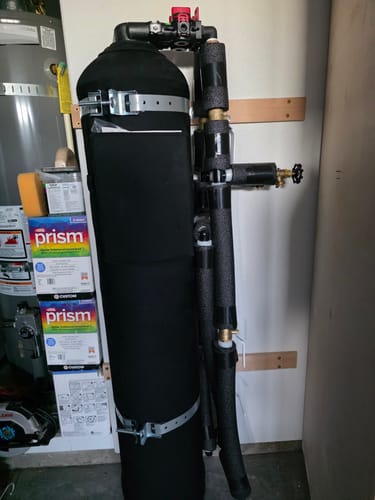
Once I committed to solving our hard water problem, I spent three weeks researching water softening technologies. The market offers several approaches: traditional salt-based ion exchange, salt-free conditioning systems, reverse osmosis, and magnetic treatment devices.
Salt-based systems like the SoftPro ECO work through ion exchange—hard minerals are swapped for sodium ions as water passes through specialized resin beads. This technology has decades of proven performance, unlike some newer "salt-free" alternatives that condition rather than actually remove hardness minerals.
I compared capacity ratings across multiple brands. The SoftPro ECO's 32,000-grain capacity matched our household's needs perfectly. With four family members and moderate water usage, the calculations suggested 7-10 days between regeneration cycles—frequent enough for consistent soft water without excessive salt consumption.
What set the SoftPro ECO apart was its high-efficiency design. Traditional softeners regenerate based on time intervals, often wasting salt and water. The ECO model uses demand-initiated regeneration, monitoring actual water usage and regenerating only when the resin bed approaches saturation.
The efficiency numbers were compelling—up to 75% less salt usage compared to timer-based systems.
This mattered both environmentally and economically, especially with salt prices fluctuating seasonally.
Build quality was another decisive factor. The Vortech distributor and collector assembly ensures even flow distribution through the resin bed, maximizing contact time and improving efficiency. The digital control head provides precise monitoring and programming capabilities that basic mechanical systems can't match.
NSF certification gave me confidence in performance claims. The SoftPro ECO meets NSF/ANSI Standard 44 for cation exchange softeners, meaning independent testing verified its capacity ratings and contaminant reduction capabilities.
Unboxing and Initial Impressions
The SoftPro ECO arrived via freight delivery in professional packaging that immediately suggested quality manufacturing. The 180-pound system required two people to move, but the included documentation made positioning straightforward.
First impressions were positive. The fiberglass tank felt substantial without being overly bulky, and the digital control head looked more sophisticated than the basic timers on budget models I'd considered. All components were individually wrapped and protected—no shipping damage despite the cross-country journey.
The installation manual was refreshingly clear, with detailed diagrams and step-by-step instructions. Unlike some technical documentation I'd encountered, this actually seemed written for homeowners rather than professional installers.
Component quality exceeded expectations. The bypass valve assembly was solid brass construction, and all fittings appeared to be premium materials. The resin tank's interior coating looked uniform and professional—details that suggested long-term durability.
One pleasant surprise was the included water test kit. While basic, it provided immediate confirmation of our water hardness and established a baseline for measuring improvement post-installation.
Installation Experience and Setup Process

I chose professional installation despite my DIY inclinations, mainly due to local plumbing codes and the complexity of integrating with our existing system. The certified installer arrived with all necessary tools and completed the job in approximately four hours.
Preparation involved identifying the main water line entry point and ensuring adequate space for the softener tank, salt storage, and drain connection. Our basement location was ideal—level floor, nearby electrical outlet, and easy access to the floor drain for backwash discharge.
The installation process revealed the system's thoughtful engineering. The Vortech distributor eliminates the need for a gravel bed, simplifying installation and reducing the tank height required. This was particularly beneficial in our basement with limited ceiling clearance.
Plumbing connections were straightforward 1-inch copper, though the installer recommended upgrading our old galvanized bypass valve to match the system's brass components. This addition cost $85 but ensures consistent water pressure and prevents corrosion issues down the road.
The initial programming took about 20 minutes to customize for our specific conditions.
We entered our water hardness level (12 grains), iron content (0.3 PPM), and household size. The system calculates optimal regeneration timing and salt efficiency based on these parameters.
First regeneration occurred that evening—a 90-minute process that's surprisingly quiet. The control head displays each cycle phase, helping you understand what's happening and when normal water service will resume.
Water pressure remained excellent throughout the house post-installation. I measured 45 PSI at various fixtures, only 3 PSI less than our municipal supply pressure—well within acceptable ranges for normal household use.
Performance Testing and Real-World Results
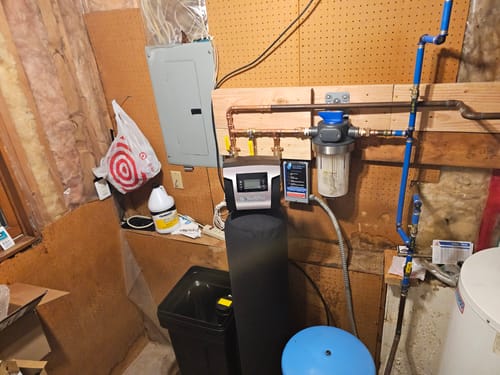
I tested water hardness immediately after installation and got exactly what the specifications promised. Our incoming water measured 12 grains per gallon, while softened water consistently tested at 0-1 grains—effectively complete hardness removal.
The transformation was noticeable within 48 hours. Soap lathered easily in the shower, and that tight, dry feeling after bathing disappeared completely. My wife noticed the difference immediately, commenting that her skin felt softer and required less moisturizer.
Kitchen improvements were equally dramatic. Glassware emerged from the dishwasher spot-free without rinse aids or special detergents. Our stainless steel appliances stayed cleaner longer, and the coffee maker's performance improved noticeably—no more mineral taste in our morning brew.
Laundry results exceeded expectations. Whites stayed brighter, colors appeared more vibrant, and fabrics felt softer without fabric softener. We reduced detergent usage by approximately 30% while achieving better cleaning results—soft water allows detergents to work more effectively.
After six months, I measured the water heater's energy consumption and found a 12% reduction compared to pre-softener usage.
Scale buildup on heating elements was virtually eliminated, allowing more efficient heat transfer and reducing operating costs.
The regeneration cycle performs exactly as designed. Based on our usage patterns, regeneration occurs every 8-9 days, consuming approximately 6 pounds of salt per cycle. This efficiency matches manufacturer specifications and keeps operating costs reasonable.
Iron removal, while not the system's primary purpose, has been effective. Our water contains 0.3 PPM ferrous iron, which the softening process reduces to undetectable levels. This prevents the rusty staining that occasionally appeared on white laundry.
Operating Costs and Long-Term Economics
Salt consumption averages 25-30 pounds monthly for our household of four. At current prices ($6-8 per 40-pound bag), monthly salt costs range from $4-6—significantly less than the premium detergents and cleaning products we previously required.
Water usage for regeneration averages 45 gallons per cycle. With regeneration every 8-9 days, this adds roughly 150 gallons monthly to our water bill—approximately $3-4 at local utility rates.
Electricity consumption is minimal. The digital control head draws less power than a standard nightlight, adding perhaps $2-3 annually to electric bills. The efficiency gains from our water heater more than offset this small increase.
Total monthly operating costs run $8-12, while our savings in soap, detergent, and appliance maintenance exceed $35-40 monthly.
The positive cash flow was apparent within the first quarter of operation.
Annual maintenance costs are limited to periodic resin cleaning with iron-out products if needed—approximately $15-20 yearly. The system includes a 10-year warranty on the tank and 5 years on the control head, providing peace of mind for major components.
Long-term economics look favorable. Our water heater, dishwasher, and washing machine should last significantly longer without constant mineral exposure. Appliance protection alone could save thousands over the system's expected 15-20 year lifespan.
The payback period for our investment was approximately 14 months when factoring in reduced operating costs and eliminated specialty cleaning products. Subsequent years provide pure savings while protecting our home's plumbing infrastructure.
Maintenance Reality and User Experience
Daily operation requires zero intervention—the system manages everything automatically. The salt level indicator provides advance warning when refills are needed, typically every 6-8 weeks depending on usage patterns.
Adding salt is straightforward: lift the brine tank lid and pour in standard water softener salt pellets. I prefer solar salt for its purity, though standard pellets work fine. The 200-pound capacity means I buy salt quarterly and store it conveniently in our basement.
Monthly maintenance involves checking the salt bridge formation and ensuring proper dissolution. In 18 months, I've encountered this issue once—easily resolved by breaking up the bridged salt with a broom handle. Proper salt type and storage prevent most bridging problems.
The digital display provides useful diagnostics. I can check regeneration history, current capacity remaining, and salt levels without guesswork. Error codes are clearly explained in the manual, though I haven't encountered any operational issues.
Seasonal performance remains consistent. Summer's higher water usage triggers more frequent regeneration, while winter's reduced consumption extends cycles to 10-12 days. The demand-based regeneration automatically adapts without manual adjustments.
The system has operated flawlessly for 18 months without requiring any professional service calls.
This reliability was a key factor in choosing the SoftPro ECO over cheaper alternatives with questionable longevity.
Water pressure remains excellent throughout all phases of operation. Even during regeneration, the bypass valve ensures uninterrupted service to the house, though the water temporarily returns to its original hardness.
Final Assessment and Buying Recommendation
After 18 months of ownership, the SoftPro ECO has exceeded my expectations in performance, reliability, and operating efficiency. The initial investment has paid for itself through reduced utility costs and eliminated specialty cleaning products.

Most importantly, our quality of life improved dramatically. Better-tasting water, softer skin and hair, cleaner dishes and laundry, and protection for our home's plumbing and appliances make this one of our best home improvement decisions.
The system is ideal for households with city water supplies containing 5-25 grains of hardness. The demand-based regeneration makes it particularly suitable for families conscious of environmental impact and operating costs.
Would I purchase the SoftPro ECO again?
Absolutely. The combination of proven technology, build quality, and long-term value makes it an excellent choice for serious water treatment needs.
For potential buyers, I recommend professional installation unless you're experienced with plumbing modifications. The peace of mind and warranty protection justify the additional cost. Also, factor salt storage into your planning—you'll want convenient access for periodic refills.
The SoftPro ECO represents a significant but worthwhile investment in your home's infrastructure. If you're dealing with hard water issues and want a reliable, efficient solution that will serve your family for decades, this system delivers exactly what it promises.