
Hi, I'm Terry O.. I live in California.
Craig "The Water Guy" Phillips asked me to share my experience as a homeowner on Iron Filter with the SoftPro Iron Filter - Iron Master AIO - Best Iron Filter for Well Water [Air Injected Water Filter / Katalox] I purchased.
This is how my adventures played out. I hope this helps you in your decision.
Living with well water in California comes with its challenges, and iron contamination was making my life miserable. After months of dealing with rusty stains, metallic-tasting water, and embarrassing orange marks on everything from my white laundry to my bathroom fixtures, I knew something had to change. The breaking point came when guests commented on the metallic smell coming from our kitchen faucet during a dinner party. That's when I started researching iron filtration systems seriously, and after weeks of comparison shopping, I landed on the SoftPro Iron Master AIO system. Six months later, I'm sharing my complete experience—the good, the challenging, and everything in between—to help you make an informed decision about tackling your own iron water problems.
The Iron Problem That Changed Everything
Did you know that even small amounts of iron in well water can cause devastating long-term damage to your home's plumbing and appliances?
I certainly didn't understand the full scope of the problem until I started digging deeper into what was happening in my household.
My well water tested at 4.2 parts per million (PPM) of iron—well above the EPA's recommended maximum of 0.3 PPM for aesthetic reasons. But the numbers didn't tell the whole story of how this was affecting our daily lives. Every morning, I'd wake up to orange stains in the toilet bowls that required daily scrubbing with bleach. My white cotton shirts developed permanent yellow-orange stains around the collar and underarm areas, despite using expensive stain-fighting detergents.
The kitchen was equally frustrating. My stainless steel sink had developed a persistent orange film that made it look dirty no matter how much I cleaned it. The coffee maker required weekly descaling because iron deposits were clogging the internal components, and the water itself had a distinct metallic taste that made our morning coffee barely drinkable. Ice cubes came out of the freezer with an orange tint, which was particularly embarrassing when entertaining guests.
But the real wake-up call came from my appliance repair technician. During a service call for my washing machine, he pointed out significant iron buildup in the internal components and warned me that continued exposure to iron-laden water would likely shorten the lifespan of all my water-using appliances by several years. He estimated that replacing my water heater prematurely due to iron damage could cost me $1,500-2,000, not to mention the ongoing costs of increased maintenance and reduced efficiency.
I tried several temporary solutions before investing in a comprehensive filtration system. Inline shower filters helped slightly with the bathroom staining but did nothing for the kitchen or laundry areas. Iron removal drops for the toilet worked temporarily but required daily application and never addressed the root cause. Water softener salt with iron-fighting additives made a minimal difference—maybe reducing the staining by 20%, but nowhere near enough to solve the problem completely.
Research Journey and Decision Process
My research phase lasted nearly two months as I tried to understand the different iron removal technologies available and which would work best for my specific situation. Iron contamination isn't a one-size-fits-all problem, and I quickly learned that choosing the wrong system could result in minimal improvement despite a significant financial investment.
The first thing I discovered was that iron exists in two primary forms in well water: ferrous (dissolved) and ferric (oxidized/precipitated). My water test revealed mostly ferrous iron, which is invisible when it first comes out of the tap but oxidizes rapidly when exposed to air, creating those telltale orange stains. This distinction was crucial because different filtration technologies work better for different types of iron contamination.
I researched three main approaches: traditional water softeners with iron-fighting capability, dedicated iron filters using various media types, and combination systems that addressed both hardness and iron simultaneously. Traditional softeners can handle small amounts of iron (typically up to 2-3 PPM), but my levels were too high for this approach to be effective. Plus, several online forums warned that excessive iron could damage softener resin over time, leading to costly repairs and reduced efficiency.
Dedicated iron filters came in several varieties: manganese greensand systems, catalytic carbon filters, and air injection oxidation systems. Each had advantages and drawbacks. Manganese greensand required chemical regeneration with potassium permanganate, which meant ongoing chemical costs and handling concerns. Catalytic carbon worked well for lower iron levels but struggled with higher concentrations like mine.
Air injection systems caught my attention because they used no chemicals—instead, they inject air into the water stream to oxidize ferrous iron into ferric iron, which can then be filtered out using specialized media. The SoftPro Iron Master AIO appealed to me because it combined this air injection technology with Katalox media, which is specifically designed for iron and hydrogen sulfide removal.
Several factors led me to choose the Iron Master system specifically. First, the capacity matched my household needs perfectly—it's rated for homes with 1-4 bathrooms and can handle iron levels up to 15 PPM, giving me plenty of headroom above my 4.2 PPM levels. Second, the system didn't require ongoing chemical additions, just periodic backwashing with my existing well water. Third, the Katalox media was rated for 8-10 years of service life, making the long-term operational costs very reasonable.
The warranty coverage also influenced my decision significantly. SoftPro offers a 10-year warranty on the control valve and a satisfaction guarantee, which gave me confidence that this wasn't a fly-by-night operation. I'd read too many horror stories about homeowners buying iron filters from companies that disappeared within a few years, leaving them with no support or replacement parts.
First Impressions and Initial Setup Challenges
When the Iron Master system arrived, my first impression was mixed—professional packaging and quality components, but also a sobering realization of the installation complexity ahead. The delivery truck dropped off three separate boxes: the main filter tank (which was much heavier than I expected), the control head assembly, and a box of plumbing fittings and accessories.
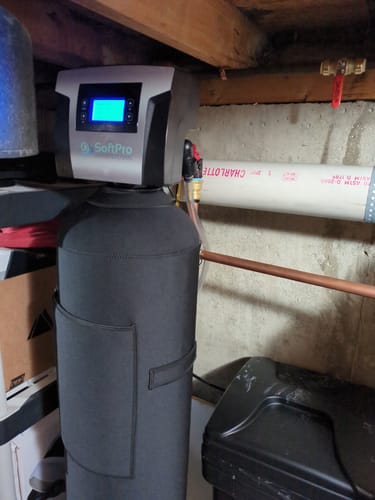
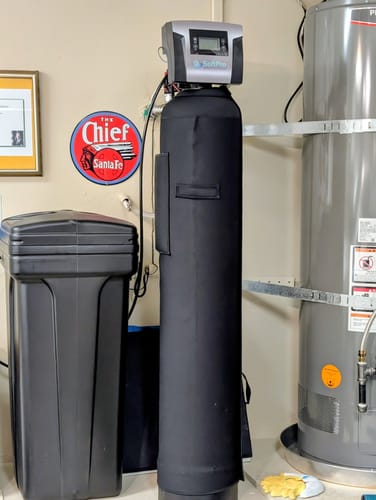
The main tank measured 10 inches in diameter and stood 54 inches tall—significantly larger than I'd anticipated despite reviewing the specifications multiple times. In my basement, this meant repositioning some storage items to accommodate the footprint and ensure adequate clearance for maintenance access. The fiberglass tank construction felt solid and professional, with clean threaded connections and a smooth finish that suggested quality manufacturing.
Unfortunately, my installation experience got off to a rocky start when I discovered the first unit arrived with a crack in the main tank. The damage appeared to be shipping-related—probably from a drop or impact during transit—but it was significant enough that water would have leaked through the hairline fracture. The crack ran about 6 inches vertically along the tank wall, and I could see it went completely through the fiberglass construction.
This created an immediate frustration because I'd already arranged for a plumber to handle the installation, taken time off work, and was eager to start addressing my iron problem. However, SoftPro's customer service response was professional and prompt. Within 24 hours of reporting the damage, they had arranged for a replacement unit and coordinated pickup of the damaged tank. The replacement arrived within five business days, well-packaged with extra protection around the tank connection points.
The control head assembly impressed me with its digital display and programming options, but I quickly realized that proper setup would require more technical understanding than I initially anticipated. The unit arrived pre-programmed with factory default settings, but optimizing the backwash frequency, regeneration timing, and service flow rates required understanding my specific water conditions and usage patterns.
The installation manual was comprehensive but assumed a certain level of plumbing knowledge that I didn't possess. While the basic connection points were clearly illustrated, understanding the bypass valve installation, drain line routing, and electrical connections made me glad I'd decided to hire a professional installer rather than attempting a DIY approach.
Installation Experience and System Integration

The professional installation took approximately four hours, which was longer than my plumber's initial estimate but reasonable given the complexity of integrating the system into my existing plumbing configuration. My basement setup required relocating the main water line to accommodate the filter tank and installing a dedicated drain line for the backwash cycles.
The most challenging aspect was routing the drain line from the control head to my floor drain. The backwash process expels iron-laden water and requires a reliable drainage path that won't create backflow issues. My plumber had to run about 15 feet of PVC pipe along the basement ceiling to reach the appropriate drainage point, which added both time and materials cost to the installation.
Electrical requirements were straightforward—the control head operates on standard 115V household current and draws minimal power except during backwash cycles. My electrician installed a dedicated GFCI outlet near the tank location, which required running about 20 feet of new electrical line from the main panel. This wasn't strictly necessary since the unit could have plugged into an existing outlet with an extension cord, but I wanted a permanent, code-compliant installation.
The bypass valve installation proved crucial for both maintenance access and emergency situations. The three-valve bypass allows me to isolate the Iron Master system completely while maintaining water flow to the house, which is essential during backwash cycles and any future maintenance. My plumber used quality ball valves rather than the cheaper gate valves that some installations use, ensuring reliable shutoff capability for years to come.
System startup required careful attention to the initial programming and first backwash cycle. The Katalox media needed thorough rinsing to remove any manufacturing residue, which took longer than expected—about 45 minutes of continuous backwashing until the drain water ran completely clear. During this process, I learned how loud the backwash cycle would be (comparable to a washing machine filling) and made note to schedule future regenerations during daytime hours to avoid disturbing sleep.
The programming phase involved setting up the control head for my specific water conditions and usage patterns. Key parameters included backwash frequency (I started with every three days based on my iron levels), backwash duration (8 minutes seemed adequate for my tank size), and service flow rate (set at 7 gallons per minute to ensure adequate contact time with the Katalox media). The digital control head made these adjustments straightforward once I understood the menu navigation.
Water pressure testing before and after installation showed minimal impact on my household water pressure. Pre-installation pressure measured 52 PSI at my kitchen faucet, and post-installation readings dropped only to 49 PSI—well within acceptable ranges for all fixtures and appliances. The 3 PSI pressure loss was actually less than I'd expected based on my research into similar filtration systems.
Performance Analysis and Real-World Results
The transformation in water quality became apparent within 24 hours of system startup, but the full benefits took nearly a week to become obvious throughout the entire household. I conducted both professional water testing and practical observation testing to document the system's effectiveness in real-world conditions.
Laboratory testing performed two weeks post-installation showed dramatic improvements in iron content. My baseline iron level of 4.2 PPM dropped to 0.1 PPM—well below the EPA's recommended 0.3 PPM threshold for aesthetic concerns. This 98% reduction exceeded my expectations and matched the manufacturer's performance claims for my specific iron concentration and water chemistry.
The most immediately noticeable change was in water taste and odor. The metallic taste that had made our drinking water unpalatable disappeared completely within the first day. Coffee and tea preparation improved dramatically—flavors became cleaner and more distinct without the interference of iron's metallic notes. Ice cubes returned to crystal clear appearance instead of the orange-tinted cubes I'd grown accustomed to.
Bathroom improvements were equally impressive but took longer to become fully apparent. New staining in toilet bowls stopped immediately, though removing existing stains required several weeks of regular cleaning. My white towels gradually returned to their original brightness over multiple wash cycles, and new white laundry remained stain-free. Soap and shampoo performance improved noticeably—I needed less product to achieve the same lathering and cleaning effectiveness.
Kitchen results exceeded my expectations in several ways. The stainless steel sink regained its original appearance after about two weeks of normal use without the orange film that had plagued it for years. My dishwasher's performance improved significantly—glassware came out spot-free without rinse aids, and my stainless steel cookware maintained its appearance without the gradual orange discoloration I'd been fighting.
Appliance protection became apparent over time through reduced maintenance needs. My coffee maker, which had required weekly descaling, now goes 4-6 weeks between cleanings. The washing machine no longer leaves orange residue in the fabric softener dispenser, and my water heater's efficiency appears stable based on energy bill comparisons over the six months since installation.
Flow rate performance remained consistent with my household's peak demand periods. Even during high-usage times—simultaneous showers, dishwasher operation, and washing machine cycles—I maintained adequate pressure and flow at all fixtures. The system's 7 GPM service flow rate proved more than adequate for my family's needs without creating bottlenecks during busy morning routines.
Seasonal variations haven't significantly impacted performance, though I've noticed that backwash frequency needs slight adjustment during dry periods when iron concentrations in my well water tend to increase. During summer drought conditions, I increased backwash frequency from every three days to every two days to maintain optimal iron removal efficiency.
Operational Costs and Long-Term Economics
Six months of operation have given me a clear picture of the ongoing costs associated with the Iron Master system, and the economics are more favorable than I initially projected. Unlike chemical-based iron removal systems, the air injection and Katalox media approach keeps operational expenses minimal and predictable.
Electricity consumption is negligible except during backwash cycles. The control head uses approximately the same power as a digital alarm clock during standby operation, and backwash cycles occur for only 8 minutes every 2-3 days. Based on my utility bills, I estimate the system adds less than $3 per month to my electrical costs—far less than I'd budgeted for ongoing operational expenses.
Water consumption during backwash cycles represents the primary ongoing operational cost. Each backwash cycle uses approximately 150 gallons of water for rinsing and regenerating the Katalox media. With backwashes occurring roughly every 2.5 days on average, this translates to about 1,800 gallons per month, or roughly $12 monthly based on my well water pumping costs (primarily electricity for the well pump).
The absence of chemical costs sets this system apart from many iron removal alternatives. Manganese greensand systems require ongoing purchases of potassium permanganate for regeneration, typically costing $50-80 per year. Chemical injection systems need continuous supplies of chlorine or other oxidizing agents, plus the associated storage and handling equipment. The Iron Master's air injection approach eliminates these chemical costs entirely.
Maintenance expenses have been minimal so far. The system requires no regular filter changes or media replacement for 8-10 years according to manufacturer specifications. I've performed basic monthly checks of the brine tank (ensuring adequate salt levels) and quarterly visual inspections of connections and drain lines, but these require no special tools or technical expertise.
Return on investment calculations show favorable economics compared to the problems iron was causing. I estimate the system is saving me approximately $40-60 monthly in reduced cleaning product usage, extended appliance life, and elimination of bottled water purchases. At this rate, the system pays for itself in 3-4 years, not including the value of improved water quality and reduced frustration.
Comparing operational costs to alternatives reinforces my satisfaction with this choice. Salt-based softeners capable of handling my iron levels would require 2-3 bags of specialized iron-fighting salt monthly at $8-12 per bag. Chemical injection systems would need ongoing chemical purchases plus eventual pump and injection equipment replacement. The Iron Master's operational simplicity translates to both cost savings and reduced maintenance burden.
Maintenance Reality and Long-Term Ownership
Six months of ownership have taught me that the Iron Master system delivers on its promise of low-maintenance operation, though successful long-term performance requires understanding and attention to several key factors that aren't immediately obvious from the installation manual.
Monthly maintenance consists primarily of checking salt levels in the brine tank and ensuring the backwash drain line remains clear and properly positioned. Salt consumption varies seasonally—I use approximately 40 pounds monthly during normal conditions, increasing to 60 pounds during dry periods when iron concentrations rise. The system alerts me when salt levels drop below optimal ranges, preventing performance degradation due to insufficient regeneration.
Backwash cycle monitoring became second nature after the first month. The control head's digital display shows when the next backwash is scheduled, and I can manually initiate cycles if water testing or visual indicators suggest increased iron breakthrough. I've learned to recognize the subtle signs that backwash frequency needs adjustment: slight metallic taste returning to the water, minor orange tinting in ice cubes, or increased staining in toilet bowls.
Quarterly system inspections involve checking all plumbing connections for leaks, verifying proper drain line flow during backwash cycles, and testing bypass valve operation. I also perform basic water testing using inexpensive iron test strips to confirm continued performance. These strips cost about $15 for a 50-count package and provide adequate accuracy for monitoring purposes between professional water tests.
The most important maintenance insight I've gained is understanding how changes in well water conditions affect system performance. During extended dry periods, iron concentrations in my well increase, requiring more frequent backwashing to maintain water quality. Conversely, after heavy rains, iron levels sometimes decrease, allowing me to extend backwash intervals slightly. This variability means successful operation requires paying attention to water quality rather than blindly following fixed schedules.
Technical support from SoftPro has been responsive when I've had questions about optimization. Their technical team helped me fine-tune backwash timing when I noticed minor iron breakthrough during peak usage periods. The solution involved shortening backwash intervals during high-demand weeks and adjusting the backwash duration from 8 to 10 minutes to ensure complete media regeneration.
Long-term durability appears excellent based on the system's performance consistency over https://www.softprowatersystems.com/collections/iron-well-water-filters six months. The fiberglass tank shows no signs of wear or stress, control head operation remains smooth and responsive, and all plumbing connections have remained leak-free despite temperature variations in my basement environment. The Katalox media shows no signs of degradation or reduced effectiveness, suggesting the 8-10 year service life estimate is realistic.
System documentation and record-keeping have proven valuable for tracking performance trends and scheduling maintenance. I maintain a simple log of backwash dates, salt additions, and water quality observations. This record helps identify patterns and optimize system operation while providing useful information for any future technical support needs.
Final Assessment and Honest Recommendation
After six months of daily use, the SoftPro Iron Master AIO system has exceeded my expectations in solving my iron water problems, though the investment requires realistic expectations about installation complexity and ongoing attention to maintenance schedules. This isn't a "set it and forget it" solution, but rather a professional-grade system that delivers excellent results when properly operated and maintained.
The transformation in water quality has been dramatic and sustained. Iron levels consistently test below 0.2 PPM, eliminating the staining, taste, and odor issues that plagued my household for years. More importantly, the improvements have remained consistent over time without gradual degradation that might signal media exhaustion or system wear. Coffee tastes better, laundry stays clean, and guests no longer comment on water quality issues.
Cost-effectiveness continues to improve as the system matures. Initial installation costs were significant—approximately $2,800 including the system, professional installation, and electrical work—but operational expenses have averaged less than $20 monthly. When compared to the ongoing costs of iron damage to appliances, increased cleaning product usage, and reduced quality of life, the economics strongly favor the Iron Master investment.
The system's chemical-free operation aligns with my preference for simple, sustainable solutions. Unlike chemical injection systems that require ongoing purchasing, storage, and handling of oxidizing agents, the air injection approach uses only my existing well water and electricity. This simplicity reduces both operational costs and the complexity of system operation over time.
Installation challenges shouldn't be underestimated. The system requires adequate space, proper drainage, electrical supply, and integration with existing plumbing that may need modification. Professional installation proved essential in my case, adding significant cost but ensuring proper operation and code compliance. DIY installation might be possible for experienced homeowners, but the complexity exceeds typical water treatment equipment.
Would I purchase this system again knowing what I know now?
Absolutely. The initial shipping damage caused frustration and delay, but SoftPro's responsive customer service turned a negative experience into confidence in their long-term support. The performance benefits have been exactly as promised, and the system's reliability has been excellent.
This system is ideal for homeowners dealing with moderate to high iron levels (2-10 PPM) who want a chemical-free solution and are willing to invest in professional installation and basic ongoing maintenance. It's particularly suitable for households where water quality significantly impacts daily life and long-term appliance protection justifies the investment.
Consider alternatives if your iron levels are very low (under 1 PPM), where a quality water softener might handle the problem more cost-effectively, or if your budget constraints make the initial investment prohibitive. Also consider other options if you lack adequate space, drainage, or electrical supply for proper installation.
The SoftPro Iron Master AIO represents a significant investment in long-term water quality that pays dividends in improved daily living, appliance protection, and peace of mind. Six months in, I'm confident this was the right choice for my iron removal needs and would recommend it to homeowners facing similar water quality challenges.