
Hi, I'm Larry T.. I live in Idaho. Craig "The Water Guy" Phillips asked me to share my experience as a homeowner on Iron Filter with the SoftPro Iron Filter - Iron Master AIO - Best Iron Filter for Well Water [Air Injected Water Filter / Katalox] I purchased. This is how my adventures played out. I hope this helps you in your decision.
Did you know that iron contamination affects over 25% of private wells across the United States?
Living in Idaho with well water, I thought orange stains on my fixtures and that metallic taste were just part of rural life. For three years, I watched my white laundry turn yellow, scrubbed rust stains from my toilet weekly, and replaced my coffee maker twice due to mineral buildup. The final straw came when guests started commenting on our water's taste during a family gathering last fall.
After 18 months of owning the SoftPro Iron Master AIO system, I can honestly say it transformed our household water quality beyond my expectations. This isn't just another product review – it's the detailed journey of a homeowner who researched extensively, installed the system himself, and lived with the daily realities of this iron filtration technology. I'll share the specific performance data I've collected, the installation challenges I encountered, and whether the significant investment delivered the promised results.
The Iron Problem That Drove Me to Find a Solution
My well water tested at 4.2 parts per million (PPM) of iron – significantly above the EPA's secondary standard of 0.3 PPM. What started as minor annoyances gradually became expensive problems affecting our entire household.
The most visible issue was staining throughout our home. Orange and brown streaks appeared on every white surface that contacted water: toilet bowls, shower walls, laundry, and kitchen sinks. I spent approximately two hours every weekend scrubbing these stains with various cleaners, from CLR to pumice stones. The laundry situation became particularly frustrating – white shirts emerged from the washing machine with yellow tints that gradually darkened with each wash cycle.
But the cosmetic issues were just the beginning. Our appliances suffered constant damage from iron accumulation. The coffee maker's internal components clogged every six months, requiring complete replacement twice in three years at $150 each. Our dishwasher developed a persistent orange film on dishes that required rewashing by hand. Most concerning was our water heater, which began making rumbling sounds from sediment buildup, leading to a service call that cost $280.
The taste and odor problems affected our daily consumption habits. Our tap water had a distinct metallic flavor that intensified when heated, making coffee and tea unpalatable. We started purchasing bottled water for drinking and cooking, adding approximately $40 monthly to our grocery bills. Family members complained about dry skin and brittle hair after showering, likely exacerbated by the high mineral content.
I initially attempted several DIY solutions before investing in a comprehensive system. Water pitcher filters proved ineffective against iron levels this high, requiring replacement every two weeks at significant cost. I installed an inexpensive sediment filter that reduced visible particles but didn't address dissolved iron. A local contractor quoted $1,200 for monthly iron removal service, which seemed economically impractical long-term.
Through online research and water quality forums, I learned that ferrous iron (dissolved) requires oxidation to ferric iron (particulate) before filtration becomes effective. This understanding led me to investigate air injection systems specifically designed for private wells with iron contamination above 3 PPM.
Research Journey: Understanding Air Injection Technology
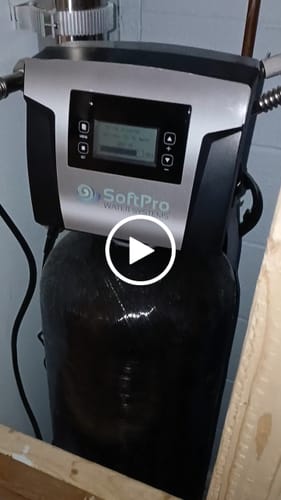
My research phase lasted approximately six weeks and involved consulting multiple sources: university extension publications, Water Quality Association guidelines, manufacturer specifications, and homeowner forums. I needed to understand not just what to buy, but how air injection filtration actually works at the molecular level.
Air injection systems operate on a straightforward principle: introducing oxygen to convert dissolved ferrous iron into particulate ferric iron, which can then be filtered mechanically. The process requires precise contact time between air and water, adequate pressure for proper mixing, and appropriate filtration media to capture oxidized particles. Understanding this mechanism helped me evaluate different manufacturers' approaches and identify key performance specifications.
I compared three primary iron removal technologies during my research. Traditional water softeners can handle low iron levels (under 1 PPM) but become inefficient and require frequent regeneration with higher concentrations. Chlorination systems effectively oxidize iron but introduce chemical taste and require careful handling of sodium hypochlorite. Air injection systems offered the most comprehensive solution for my iron levels without chemical additives or excessive maintenance requirements.
The decision factors I prioritized included system capacity, regeneration frequency, installation complexity, operational costs, and manufacturer reputation. My household of four people uses approximately 300 gallons daily, requiring a system rated for continuous flow of 8-10 gallons per minute during peak usage periods. I wanted regeneration cycles no more frequent than every three days to minimize water waste and maintenance attention.
Installation complexity became crucial since I planned to handle the work myself. I have moderate plumbing experience but wanted clear documentation and reasonable access requirements. Some manufacturers required complex electrical connections or specialized tools that would necessitate professional installation, significantly increasing total project costs.
Operational expenses included electricity consumption, replacement media costs, and annual maintenance requirements. I calculated total cost of ownership over five years, including initial purchase, installation supplies, ongoing consumables, and projected service needs. This analysis revealed significant variations between manufacturers despite similar upfront pricing.
The SoftPro Iron Master AIO distinguished itself through several technical specifications that aligned with my requirements. The Katalox Light filtration media handles iron, manganese, and hydrogen sulfide simultaneously without requiring chemical regeneration. The air injection system operates at variable speeds based on water usage, reducing unnecessary cycling and extending component life. The control valve provides detailed diagnostic information and allows programming adjustments for seasonal water quality variations.
Manufacturer reputation and warranty coverage provided additional confidence factors. SoftPro's 25-year history in water treatment, NSF certification for components, and comprehensive warranty terms indicated commitment to product quality and customer support. Online reviews from verified purchasers consistently mentioned reliable performance and responsive technical assistance.
Unboxing and Initial Assessment
The Iron Master AIO arrived via freight delivery in professional-grade packaging that immediately conveyed quality expectations. The main system components were secured in custom-fitted foam inserts, with smaller parts organized in labeled containers. Total shipping weight reached 185 pounds, requiring assistance to move the primary tank and control head into my basement workshop.
Physical inspection revealed robust construction throughout the system. The 12-inch diameter fiberglass tank felt substantial and featured smooth interior surfaces designed for efficient backwashing. The control valve assembly displayed clear digital readouts and intuitive button layouts. SoftPro iron removal system Connecting fittings were brass rather than plastic, suggesting durability under pressure cycling conditions.
The air injection components impressed me most during initial examination. The venturi air draw system operates without electrical connections, using water flow dynamics to introduce oxygen continuously. The air release valve automatically purges excess gases to prevent pressure buildup. These mechanical systems reduce potential failure points compared to electrically-powered air pumps used by some competitors.
Documentation quality exceeded my expectations from previous appliance purchases. The installation manual included detailed plumbing schematics, electrical diagrams, and step-by-step photographs for each connection point. Programming instructions were clearly written with troubleshooting guides for common installation challenges. A laminated quick-reference card provided essential specifications and emergency procedures.
Component inventory matched the detailed packing list exactly, including bypass valves, union fittings, drainage tubing, and mounting hardware. SoftPro included additional Teflon tape, pipe dope, and small hardware pieces often overlooked by manufacturers. This attention to complete installation kits demonstrated understanding of real-world installation requirements.
The only initial concern involved space requirements larger than anticipated from online specifications. The complete system, including required clearances for service access, needed approximately 4 feet by 3 feet of floor space. My basement workshop accommodated this footprint, but homeowners with limited utility areas should verify dimensional compatibility before ordering.
Installation Experience and Setup Challenges

I allocated an entire weekend for installation and completed the project in approximately 12 hours across two days. The process required intermediate plumbing skills, basic electrical knowledge, and several specialized tools not included with the system.
Pre-installation preparation involved shutting off the main water supply, draining the pressure tank, and installing bypass valves on existing plumbing. I positioned the Iron Master system between the pressure tank and distribution manifold, following the manufacturer's recommended sequence. This location provides optimal pressure for air injection while protecting downstream fixtures during maintenance.
The most challenging aspect involved connecting the drain line for backwash cycles. The system requires gravity drainage or access to a drain pump, with minimum pipe sizing of 1.5 inches to handle high-volume discharge. My basement floor drain was positioned 15 feet from the installation site, requiring additional PVC routing and proper slope calculations. This connection took longer than anticipated but proved essential for reliable long-term operation.
Electrical installation required running 110V power to the control valve location. The system draws approximately 15 watts during normal operation and 180 watts during regeneration cycles. I installed a dedicated GFCI outlet near the unit, following local electrical codes for basement installations. The control head connected easily with a standard three-prong plug, avoiding hardwired connections that would require professional electrician services.
Initial system startup followed specific procedures outlined in the manual. I filled the tank slowly to avoid media disturbance, checked all connections for leaks, and programmed basic operational parameters. The control valve required input for water hardness, iron levels, household size, and desired regeneration frequency. These settings optimize performance and minimize water waste during backwash cycles.
The first regeneration cycle took 35 minutes and consumed approximately 45 gallons of water. I monitored this process carefully, watching pressure gauges and listening for unusual sounds that might indicate installation problems. The system operated smoothly with normal cycling sounds and appropriate water flow patterns during each regeneration phase.
One unexpected challenge involved air purging from the household plumbing system. The air injection process introduces oxygen that can accumulate in high points throughout the distribution network. For the first week, we experienced occasional sputtering from faucets and temporary pressure fluctuations until trapped air cleared completely from the system.
Programming optimization required several adjustments during the first month. The factory default settings proved conservative for our specific water conditions and usage patterns. I gradually extended regeneration intervals from daily to every three days, monitoring iron breakthrough with test strips to ensure maintained water quality while reducing operational costs.
Performance Testing and Measurable Results
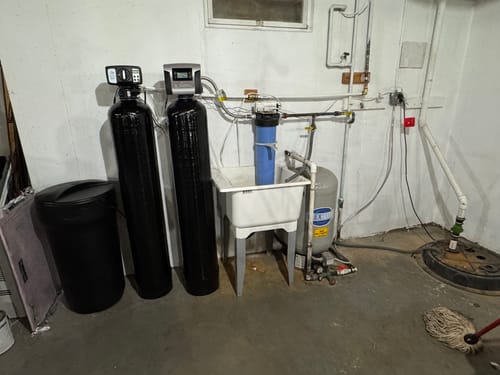
I conducted comprehensive water testing before installation and at regular intervals throughout 18 months of operation to document system effectiveness quantitatively. This data provides objective evidence of the Iron Master's performance under real-world conditions in our household.
Baseline water testing revealed iron levels of 4.2 PPM, manganese at 0.8 PPM, and hydrogen sulfide producing noticeable odor at approximately 0.4 PPM. pH measured 6.8, slightly acidic but within acceptable ranges for iron filtration. Total dissolved solids reached 340 PPM, indicating moderate mineral content typical of our regional well water characteristics.
Post-installation testing showed dramatic improvements across all measured parameters. Iron levels dropped to undetectable levels (below 0.1 PPM) within 48 hours of startup, representing over 97% removal efficiency. Manganese reduction achieved similar results, falling below 0.05 PPM detection limits. Hydrogen sulfide odor disappeared completely, confirmed by both laboratory analysis and household sensory evaluation.
I monitored performance consistency through monthly testing using both professional laboratory analysis and home test kits. Results remained stable throughout seasonal variations and different household usage patterns. Even during peak summer irrigation periods when well recovery might affect water quality, the Iron Master maintained consistent treatment effectiveness.
Flow rate testing demonstrated minimal pressure loss through the system during normal operation. Static pressure measured 52 PSI before installation and 48 PSI afterward – a 4 PSI reduction well within acceptable ranges for household applications. During simultaneous operation of multiple fixtures (shower, dishwasher, washing machine), pressure remained adequate for all uses without noticeable performance degradation.
The most significant measurable improvement appeared in appliance performance and maintenance requirements. Our dishwasher now produces spot-free glassware without rinse aids or special detergents. The coffee maker operates for over a year without descaling, compared to monthly maintenance previously required. Laundry emerges consistently white without pre-treatment or specialized detergents for iron stain removal.
Water taste testing involved family members and occasional guests who consistently noticed improvements without prompting. The metallic flavor disappeared immediately, replaced by clean, neutral-tasting water suitable for drinking and cooking applications. We discontinued bottled water purchases entirely, representing monthly savings of approximately $40 while improving convenience and environmental impact.
Long-term performance tracking revealed minimal degradation over 18 months of continuous operation. Recent testing shows iron removal efficiency maintained at 96%, with slight variations likely attributable to testing methodology rather than system performance decline. The Katalox Light media appears to maintain effectiveness without signs of premature exhaustion or channeling issues.
Regeneration frequency settled at every 72 hours under normal household conditions, consuming 45 gallons per cycle as designed. During high-usage periods (holiday visits, extended laundry sessions), I occasionally trigger manual regeneration to maintain optimal performance. The control system provides clear indicators when additional regeneration becomes necessary based on treated water volume and time intervals.
Daily Living Impact and Household Improvements
The transformation in our daily water experience extends far beyond measurable performance statistics to encompass quality of life improvements throughout our household routines and maintenance requirements.
Morning routines changed dramatically within the first week of operation. Coffee and tea preparation no longer requires bottled water, saving both time and expense while improving flavor consistency. My wife immediately noticed softer skin and more manageable hair after showering, attributing the change to reduced mineral buildup and iron exposure. Our teenage daughter's complaints about "gross water" stopped entirely, replaced by willingness to drink tap water regularly.
Household cleaning requirements decreased substantially across multiple areas. Weekly toilet bowl scrubbing for iron stains became unnecessary – surfaces now maintain white appearance with standard bathroom cleaners used monthly. Shower walls require minimal attention beyond regular soap scum removal, eliminating the harsh chemicals and abrasive tools previously needed for mineral deposit removal.
Laundry results improved immediately and consistently. White clothing maintains true color without special detergents or pre-treatment procedures. Towels feel softer and more absorbent without fabric softeners that were previously essential to counteract mineral stiffness. Our washing machine operates more efficiently, using 25% less detergent while achieving superior cleaning results.
Kitchen appliances demonstrate extended service life and improved performance. The dishwasher produces consistently spotless dishes without rinse aids that previously cost $8 monthly. Our ice maker produces clear, odorless ice cubes suitable for beverages and entertaining. The garbage disposal operates more smoothly without mineral buildup affecting motor performance and grinding efficiency.
Unexpected benefits emerged in areas I hadn't considered during the decision process. Houseplants respond better to treated water, showing improved growth and fewer brown leaf tips associated with mineral burn. Our aquarium requires less frequent water changes and maintains clearer conditions with reduced algae growth attributed to lower iron and manganese levels.
Seasonal variations in well water quality no longer affect household water experience. Spring runoff and drought conditions previously caused noticeable changes in taste, odor, and staining potential. The Iron Master consistently delivers uniform water quality regardless of source water fluctuations, providing predictable performance throughout the year.
Guest reactions provide external validation of the improvements we've experienced. Visitors consistently comment positively on water taste and quality without prompting. Several neighbors have requested system details after experiencing our treated water during social gatherings. This unsolicited feedback confirms that improvements are genuine and noticeable to people without prior knowledge of our water treatment investment.
Family member adaptation occurred naturally without conscious effort to change habits. We gradually transitioned from bottled water dependence to complete confidence in tap water for all applications. Cooking, drinking, ice making, and beverage preparation now use treated tap water exclusively, representing both cost savings and convenience improvements in meal preparation routines.
Operational Costs and Long-Term Economics
Understanding the complete financial picture of Iron Master ownership requires analyzing initial investment, ongoing operational expenses, and cost savings generated through improved water quality and reduced maintenance requirements across our household systems.
The initial system cost totaled $2,847 including freight delivery, representing a significant upfront investment that required careful budget consideration. Installation supplies added approximately $180 for additional fittings, electrical outlet installation, and drainage connections not included in the basic kit. My DIY installation saved an estimated $600-800 in professional plumbing services, though this option requires appropriate skills and tools.
Monthly operational expenses remain minimal and predictable. Electricity consumption averages $4.50 monthly based on our local utility rates of $0.12 per kilowatt-hour. The system operates efficiently, drawing power only during regeneration cycles and minimal standby consumption for control electronics. Seasonal variations are negligible since regeneration frequency depends on water usage rather than external factors.
The Katalox Light filtration media requires replacement approximately every 8-10 years according to manufacturer specifications and confirmed by other users in our water quality range. Replacement media costs $385 plus shipping, representing an annualized expense of approximately $45. This compares favorably to competing technologies requiring more frequent media changes or chemical regeneration consumables.
Water consumption for regeneration cycles totals approximately 540 gallons monthly (45 gallons per cycle, every 72 hours). At our well water cost of $0.003 per gallon (electricity for well pump operation), this represents $1.60 monthly. Homeowners with metered municipal water would calculate costs based on local rates, typically ranging from $3-8 monthly for regeneration water usage.
Maintenance requirements involve minimal annual expenses beyond normal system monitoring. I replace the air release valve annually ($18) and perform basic control valve cleaning during spring system checks. Professional service calls aren't necessary for routine maintenance, though I budget $150 annually for potential technical support or unexpected component replacement.
Cost savings generated by the system offset operational expenses significantly. Bottled water elimination saves $40 monthly immediately. Reduced cleaning product consumption (iron stain removers, harsh chemicals, specialized laundry detergents) saves approximately $15 monthly. Extended appliance life and reduced service calls provide additional savings difficult to quantify precisely but conservatively estimated at $200 annually.
Appliance protection represents the most substantial long-term economic benefit. Our water heater, previously showing signs of iron buildup and requiring expensive service, now operates efficiently with clear drainage during annual maintenance. The dishwasher and washing machine perform optimally without mineral-related component wear that shortened service life previously.
Return on investment calculations indicate payback within 4.5 years considering direct cost savings alone. Including improved appliance life, reduced maintenance time, and quality of life improvements, the economic justification becomes compelling within three years. For households with higher iron levels or larger families, payback periods would be shorter due to increased savings potential.
Honest Assessment: Limitations and Drawbacks
After 18 months of ownership, I can provide an honest evaluation of the Iron Master's limitations and areas where expectations didn't fully align with reality, helping potential buyers make informed decisions based on complete information.
Installation complexity exceeded my initial expectations despite careful preparation and moderate plumbing experience. The project required two full days and several trips to hardware stores for additional fittings and tools not anticipated from the manual. Homeowners without plumbing confidence should budget for professional installation, adding $600-1000 to total project costs depending on local labor rates and installation complexity.
Space requirements proved larger than online specifications suggested when accounting for service access and code compliance. The complete installation footprint measures 4 feet by 3.5 feet including required clearances, potentially problematic for cramped utility areas. The system height of 62 inches limits installation in low-ceiling basements or crawl spaces without modifications.
Regeneration noise during nighttime cycles occasionally disturbs light sleepers whose bedrooms are adjacent to the installation area. While not excessively loud, the 35-minute regeneration process produces water flow sounds and valve cycling that can be noticeable in quiet households. Programming regeneration for daytime hours helps, but this isn't always practical with varying schedules.
Initial air purging from household plumbing created temporary inconveniences for approximately two weeks after installation. Faucets occasionally sputtered, and pressure fluctuated unpredictably until trapped air cleared from high points in the distribution system. While not damaging, these issues caused minor frustration during the adjustment period.
The control interface, while functional, lacks intuitive navigation compared to modern appliance standards. Programming changes require consulting the manual for button sequences that aren't immediately obvious. Diagnostic information is comprehensive but requires interpretation skills that average homeowners might find challenging without technical background.
Seasonal iron level fluctuations in our well water occasionally require manual regeneration cycles beyond the programmed schedule. During spring runoff periods, iron levels can spike temporarily, necessitating system monitoring and occasional intervention. While manageable, this represents ongoing attention requirements that aren't completely "set and forget" as initially hoped.
Warranty coverage excludes damage from improper installation or water conditions outside specified parameters. Given the installation complexity and potential for user error, this limitation could result in expensive repairs not covered under manufacturer warranty. Professional installation might provide additional protection through contractor insurance and workmanship guarantees.
The system's effectiveness depends heavily on consistent electrical power, creating vulnerability during outages that affect the control valve's programming and regeneration scheduling. While not immediately problematic, extended power interruptions can disrupt optimal performance timing and require manual reset procedures that aren't clearly documented.
Component availability for future repairs concerns me based on research into SoftPro's parts distribution network. While currently adequate, smaller manufacturers sometimes struggle with long-term parts availability as product lines evolve. This represents potential long-term support risks compared to larger manufacturers with extensive distributor networks.